What Efficiency Actually Means
Efficiency gets used loosely in the sheep and beef industry to mean getting more from less, or making the best use of what you've got. It's not a new pursuit. It started decades ago with cutting costs, then moved through lifting lambing percentage — more lambs from fewer ewes — and now extends to pasture utilisation, growth rate, and producing more meat with less methane per kilogram. The current push toward low-input sheep as a breed direction is really just the latest chapter of the same story.
It's also the harder one to get right, because low-input, worm resistance and lamb survival all share the same problem: management and environment have as much influence on whether the trait shows up as the genetics do.
Why the environment has to be hard
Whether a ewe actually needs less input depends on feed, terrain, stock mix, climate and grazing policy. A simple example: where lambs go at weaning. If lambs leave the lambing platform completely and don't come back, worm larval contamination on that platform drops sharply. Most ewes fed adequately at the critical points wouldn't be affected by grazing contaminated pasture anyway — it's only when feed gets tight that the ones needing help start to show.
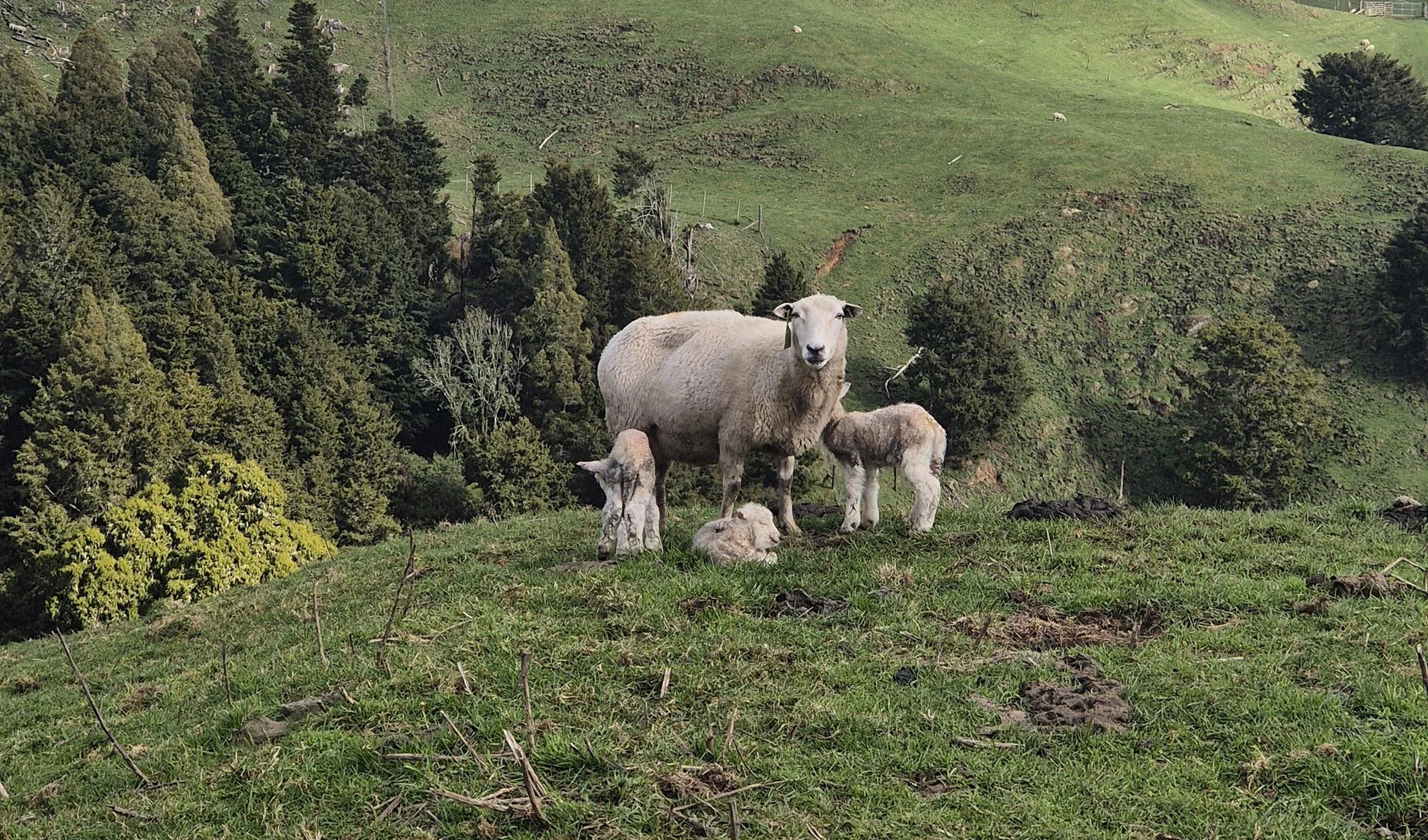
That's exactly why selection for lower input has to happen under real pressure, not favourable conditions. At Triple Farms, the stud ewes and hoggets are run alongside the commercial flock on steep hill country at Ongarue, lambing unshepherded, under a strict no-drench policy. Anything that can't hold up under that is culled regardless of pedigree or figures. It's a deliberately harder test than most breeding operations set themselves — but it's the only kind of test that means anything. A ewe that looks efficient in an easy environment hasn't proven she's efficient at all.
Worm resistance carries the same complication. A sheep bred for lower faecal egg counts and less impact from worm challenge brings that ability to a farm, but the policies on that farm determine how much of it actually gets used. Whether lambs leave at weaning, go onto summer crop, or run alongside cattle or ewes all change how much larval contamination builds up, and therefore how much the resistance genetics are actually called on. It's part of why Triple Farms FEC-tests its maternal rams rather than relying on appearance or pedigree alone, so the figure has to hold up on a real, contaminated hill block, not a clean paddock.
Lamb survival is no different. Shelter, pregnancy status, body condition score and late pregnancy feeding all affect the outcome regardless of the ewe's genetic background. Comparing and ranking ewes from different genetic backgrounds is only ever valid within the environment they were actually run in, which is the case for standardising selection on lamb survival in the first place.
The efficient ewe is the one weaning three
A ewe that weans three lambs is about as efficient as it gets. The extra feed she needs is small next to a ewe weaning two, her methane output per kilogram of lamb weaned is low, and she qualifies as a genuinely low-input animal, provided she's managed correctly.
That's the catch. The most successful triplet-bearing ewes are often the ones given the least special treatment. Overfeeding a triplet ewe from scanning onward sets her up for metabolic problems at lambing, with high ewe and lamb death rates. Underfeeding her does the same. Triplet ewes don't need much more than twin-bearing ewes, but unlike twinning ewes, they have almost no tolerance for being underfed. Running them separately isn't about giving them more; it's about making sure they don't get less than they need.
The number worth remembering: a lamb that stands and suckles within 20 minutes of birth has a 95% chance of still being alive 90 days later. Body condition score and energy status coming into lambing drive that outcome directly, and for triplet ewes, getting both right is harder than for singles or twins. As pressure builds on farms to lower methane output while holding lamb production, more ewes successfully carrying and weaning triplets is one of the real tools available. That’s not a compromise.
Where this leaves selection
None of this argues against low-input breeding, worm resistance selection or backing triplet ewes, but rather, it argues for doing it properly. Genetics only earn their reputation when they've been tested somewhere that actually asks something of them. That's the basis Triple Farms breeds on: Coopworth, Coopdale and Suftex stud genetics run under the same commercial pressure as the flock they're bred to serve, so that what leaves the farm has already proven it can perform, not just that it looks like it should.