Suftex
Selling 25 Rams annually
Bred Under Pressure
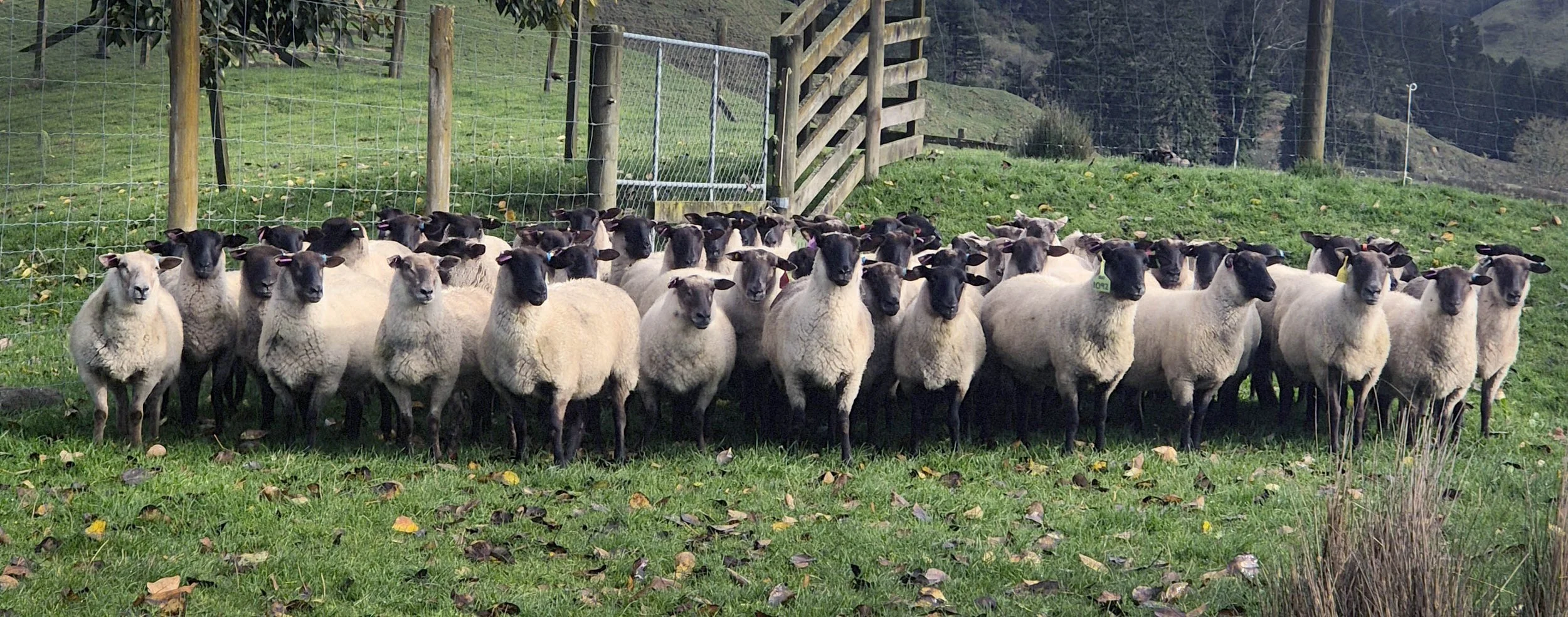
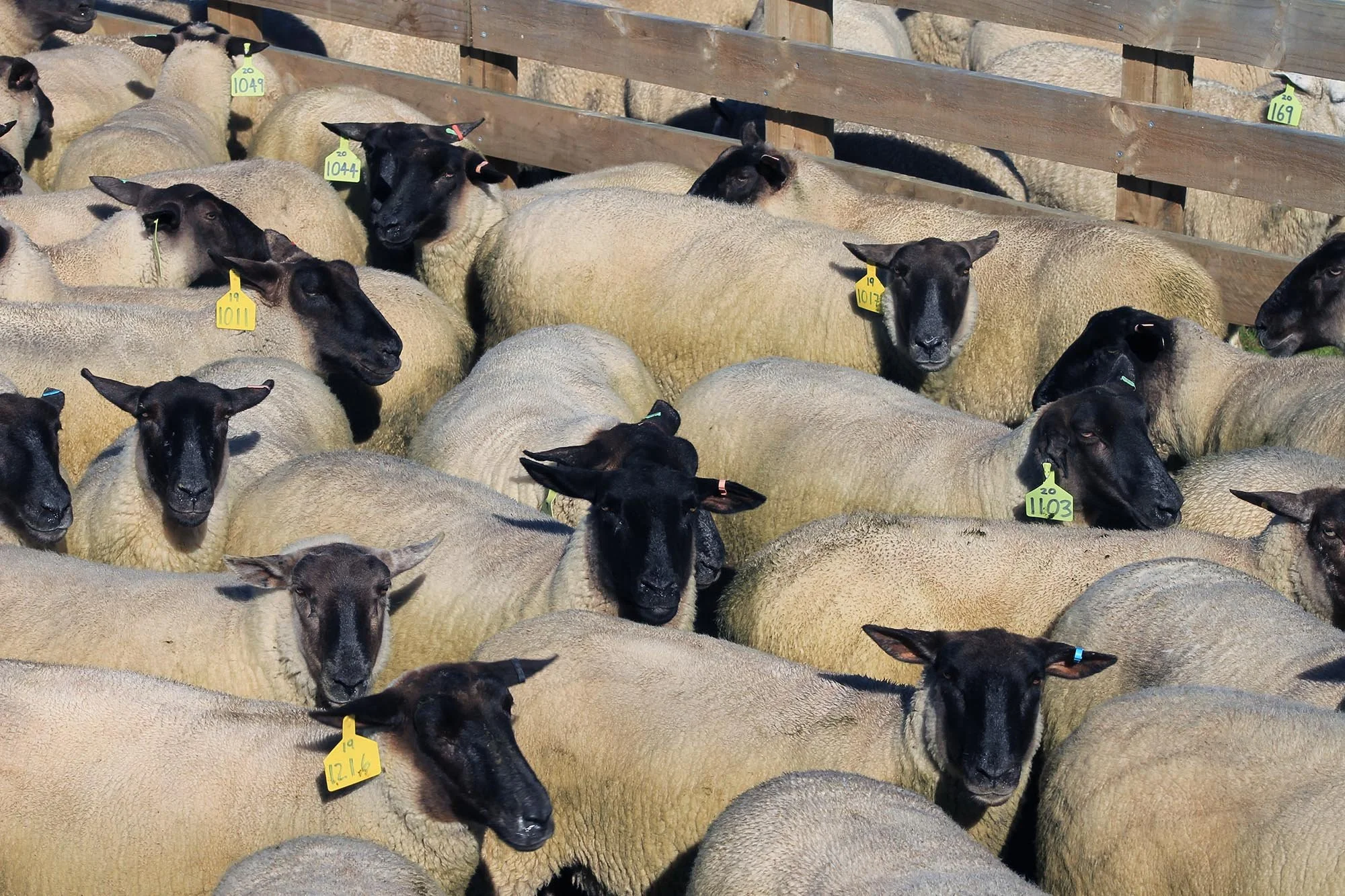
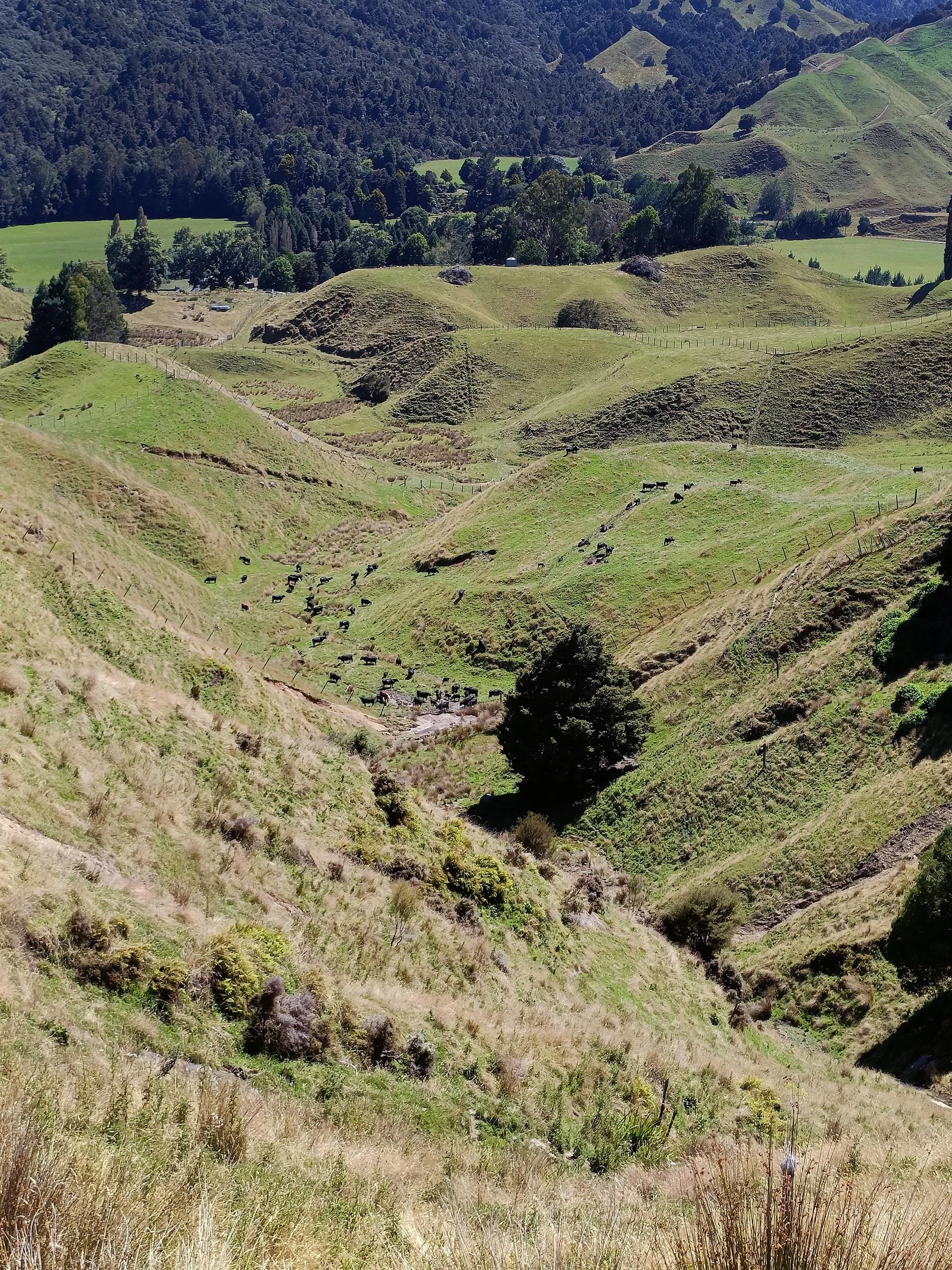
The Triple Farms Suftex flock runs alongside 3,000 commercial breeding ewes on Ongarue hill country, under a minimal-drench policy. They’re unshepherded, the same as every other flock on the farm. Bred for growth and meat yield, and expected to hold up on hill country while delivering it.
History
Ashgrove Genetics purchased the Suftex flock from Peter Cook in 2018. Initially based in Kerikeri, it was previously the River Run flock, run alongside pure Suffolks, before Ashgrove simplified the stud down to Suftex alone, capping Texel content at no more than 30% to maintain blackness. In 2023, Alan and Kerri Blake purchased the Suftex flock, along with the Coopworth flock, from Ashgrove Genetics, previously run by the Parsons family and Travis Pymm in Kaipara, Northland.
Breeding Philosophy
At Triple Farms, we believe a stud needs to perform under strict commercial conditions, not just look good on paper. Our stud flock is run alongside our commercial ewes from weaning through to mating, and anything that can't perform is culled, regardless of figures or breeding. Low input and structural soundness are at the forefront of what we look for in sheep, and we're committed to producing low-input, high-output sheep that perform under pressure — including a meat breed built primarily for growth and yield.
That standard only means something when it's tested somewhere that actually demands it. Running the Suftex flock on hill country, alongside the commercial flock, is a harder test than most terminal-sire studs set for themselves, but it's the only way to know the growth and yield on offer will actually hold up on a real commercial farm, not just in a favourable paddock.
What the Flock Emphasises
The Suftex is bred high-yielding for growth and meat, as a hardy, fast-growing sheep suited to hill country conditions. Eye muscle scanning is used to track carcass performance directly, keeping selection focused on the traits that matter most to a terminal sire: growth rate and yield.
Breeding Strategy
Structure comes first, above all else, in every selection decision. The flock is fully recorded on SIL, ewes and lambs run under a minimal drench policy, and workload is reduced through dag scoring, bare breeching. We are working toward a no dipping policy for fly in the ewe flock. Hoggets are mated, and ewes and ewe hoggets lamb unshepherded on hill country.
That adds up to genuine ewe efficiency: more from less. Less work, less cost, higher output, and less impact on the land. For a meat breed, that efficiency compounds: more kilograms of lamb weaned per ewe, and lower methane output for every kilogram produced.
The Triple Farms Guarantee
All lambs are DNA tested and are sire and dam verified
Maternal rams are FEC tested
All rams are structurally sound
Why a Triple Farms Suftex Ram?
A Coopworth x Romney ewe, or any strong maternal ewe, is only half the equation. Mating her to a terminal sire like Suftex is what maximises growth rate, carcase yield, lamb survival and profit per hectare in the lambs actually being sold. It's a long-established, low-risk three-breed strategy: a maternal ewe bred for fertility and mothering, finished over a terminal sire bred purely for growth and yield.
A Triple Farms Suftex ram brings that terminal growth advantage from a flock that's DNA verified, FEC tested and structurally sound. A ram that’s proven on steep hill country under commercial pressure, not just selected on appearance.
Genomics and Selection
Every lamb DNA tested with sire and dam verification, combined with full SIL recording and eye muscle scanning, means the Suftex flock is already positioned to benefit from genomic selection. This gives more accurate breeding values earlier, particularly for traits like growth and feed efficiency that are otherwise slow and expensive to measure directly.