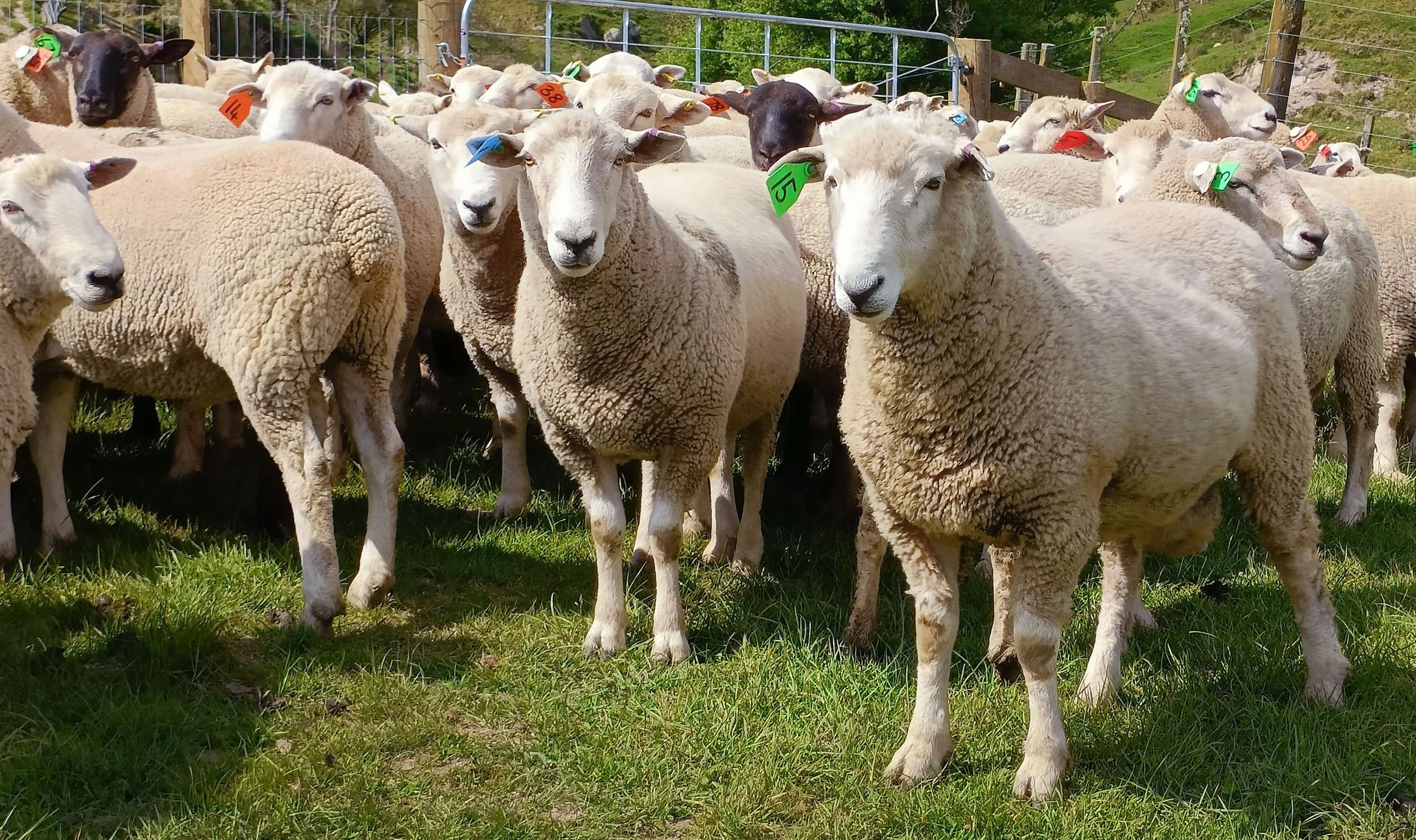
A ram can rank in the top 1% for maternal worth, growth, worm resistance or fertility, but if he can't walk the hills, mount ewes, or stay sound through joining, none of those genetics will be passed on. Structure is what allows every other trait to actually be expressed. It's why "structure first, above all else" sits at the top of the breeding strategy for every flock at Triple Farms Sheep Genetics, ahead of figures, ahead of pedigree, ahead of everything else.
Sound rams cover more ewes
Good feet, legs and mobility aren't cosmetic. They determine whether a ram can travel further to find cycling ewes, mount successfully, and keep working for the entire joining period rather than fading halfway through. On New Zealand hill country, that's not a marginal difference because a ram may need to walk several kilometres a day, climb steep country, traverse rough terrain, and still be covering ewes at the end of it. A ram that looks the part standing in a flat yard can fail outright once he's asked to do that. Hill country doesn't allow poor structure to hide.
That's exactly the environment every Triple Farms ram comes from. The Coopworth, Coopdale and Suftex flocks are run alongside the commercial flock on steep Ongarue hill country, and anything that can't hold up under those conditions is culled, regardless of figures or breeding.
Longevity is the real cost saving
A structurally correct ram generally stays in the flock longer, needs fewer replacements, and carries a lower risk of injury and lameness. One ram that lasts five seasons is considerably cheaper than replacing two or three over the same period. And that’s before you even factor in the cost of a ram that breaks down mid-joining and leaves ewes unmated…
Structure has a genetic component — but it still has to be seen
Research on more than 28,000 New Zealand crossbred ewes found foot and leg traits do carry a genetic component, with heritability estimates ranging from roughly 0.05 to 0.18 depending on the specific trait, which is low to moderate but real enough that structure can be improved through deliberate selection over generations. That's part of why it's tracked at Triple Farms rather than left to chance.
But heritability estimates that low also mean structure isn't fully captured by an index. It has to be assessed directly, animal by animal, which is why every Triple Farms ram is guaranteed structurally sound, not just ranked well on paper.
What to look for
A structurally correct ram should show strong, even feet, good heel depth, correct pastern angle, straight legs viewed from both front and behind, correct hock angle, a level topline, good jaw alignment, and large, even testicles. Movement is one of the clearest tells — watch him walk before you commit to anything else on the card.
Genetics determine a ram's potential. Structure determines whether he can deliver it. It's the reason Triple Farms won't sell a ram on figures alone, and won't keep one in the stud that can't do the job on the country he's bred for.